Coffee
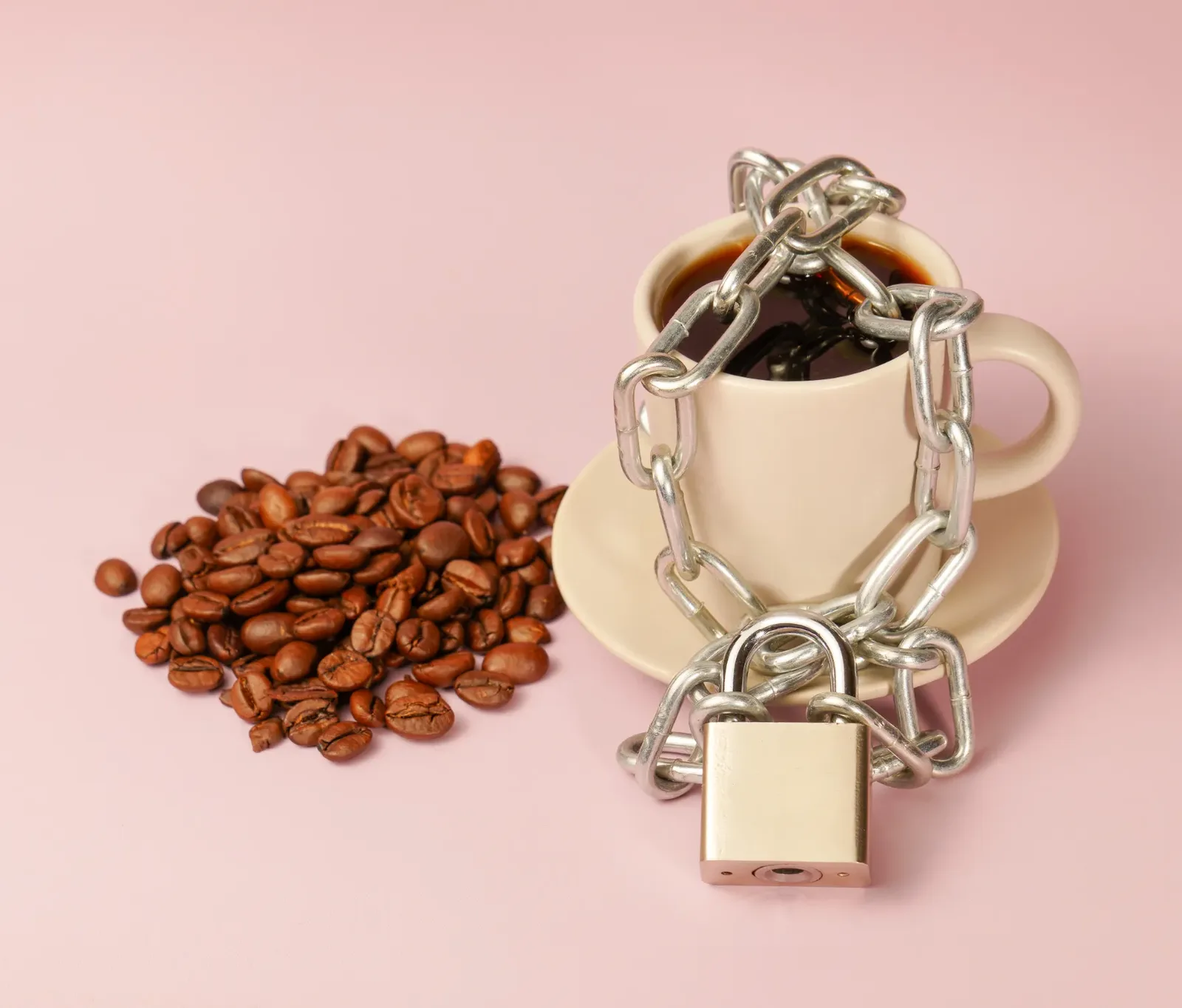
Filter, instant, espresso-based drinks and cold brews. Strength and serving size vary considerably between homes, offices and cafés.
Educational guide
Caffeine is one of the most widely consumed substances in the world, and for most people it arrives not as a decision but as part of a routine. Understanding what it is — and where it turns up — is a reasonable first step before deciding whether you want to change anything about your own consumption.
This page is general educational information. It does not diagnose, and it is not a substitute for advice from an appropriately qualified healthcare professional.
The basics
Caffeine is a naturally occurring stimulant found in the seeds, leaves and fruit of a number of plants — most familiarly the coffee plant and the tea plant. It is also produced and added to some manufactured drinks and products. When people describe caffeine as a stimulant, they generally mean that it tends to have an alerting effect and is commonly used with the intention of feeling more awake or more focused.
Two points are worth holding onto from the start. First, caffeine is not a single fixed dose: the amount in a cup varies enormously depending on the drink, the preparation, the strength and the serving size. A small home-brewed tea and a large takeaway coffee are not comparable, even though both are "a cup". Second, caffeine is not experienced identically by everyone, and that variation is genuine rather than a matter of willpower.
None of this makes caffeine unusual or alarming. It simply means that general statements about "how much is fine" are less useful than an honest picture of your own consumption and your own circumstances.
Caffeine is a plant-derived stimulant found in coffee, tea and a range of other drinks and products. Amounts differ widely between servings, and individual responses differ widely between people. Regular consumption is common and is not, on its own, evidence of a problem.
Common sources
People often account for the coffee and forget the rest. Looking at the whole picture — including sources that do not feel like "a caffeine drink" — usually gives a more accurate view of a day.
Filter, instant, espresso-based drinks and cold brews. Strength and serving size vary considerably between homes, offices and cafés.
Black tea, green tea and many other varieties. Brewing time and leaf quantity both make a difference to what ends up in the cup.
Often consumed for alertness during work, study, driving or exercise. Labels are worth reading, as amounts differ between products.
Several colas and similar carbonated drinks contain caffeine, which can be easy to overlook when it arrives alongside a meal.
Cocoa-containing foods and drinks may contribute smaller amounts, generally increasing with the cocoa content of the product.
Certain supplements, pre-workout formulations and some over-the-counter products list caffeine as an ingredient. Product labels and, where relevant, a pharmacist or doctor are the right sources of information here.
An honest inventory helps
Before changing anything, many people find it useful simply to write down what they actually consume across two or three ordinary days — including the drinks that are not thought of as caffeine. Noticing is not the same as deciding, and nothing has to change while you look.
Reasons and motivations
The reasons are rarely mysterious, and most of them are entirely ordinary. Recognising which ones apply to you tends to be more useful than deciding in advance that any of them are wrong.
Several of these reasons usually operate at once, and they can change from day to day. A cup taken for enjoyment on a quiet Sunday is not the same event as a fourth cup taken to push through an exhausting Wednesday, even though the drink is identical.

Why comparisons rarely help
People may experience caffeine differently, and those differences are real. This is one reason why comparing your consumption to a colleague's, or to a number quoted online, often produces more confusion than clarity.
Where this page stops
This website does not offer medical guidance on how much caffeine is appropriate for you, and it does not make claims about effects on health. Questions of that kind — particularly if you have health concerns, take medication, are pregnant, or have other individual circumstances — belong with an appropriately qualified healthcare professional.
A prompt, not a diagnosis
People come to this question for many reasons, and most of them have nothing to do with a crisis. The situations below are simply ones that people commonly describe. They are examples for reflection — not criteria, and not a checklist that indicates addiction.
A sense that the day cannot really begin, or a task cannot really start, until the cup is in hand.
No particular problem, but a preference to be the one deciding rather than the one following a pattern.
Noticing, mid-cup, that you do not remember making the drink or ordering it.
A feeling that evenings, rest or overall routine have shifted in a direction you would rather change.
The drink has become the standard response to pressure, deadlines or difficult tasks.
Having tried to change before, and wanting to understand what happened rather than simply trying harder.
Recognising yourself in these examples does not mean you have an addiction.
They are common experiences. Whether anything needs to change — and what, if anything, would help — depends entirely on your own circumstances, and where health is involved, on advice from an appropriately qualified healthcare professional.Vibha Jain is happy to talk through what hypnotherapy can and cannot offer before you decide anything.