
Before you arrive

What to Expect

Not knowing what happens is one of the most common reasons people delay asking. This page sets out the shape of the process plainly, so that nothing about it needs to be guessed at.

Every one of these steps depends on the individual. Nothing here should be read as a fixed programme, a promised timeline or a guaranteed result.

Vibha Jain speaking with people seated in a calm consulting room during an initial conversation.

The process

Five Steps, Described Plainly

How far you go through these steps, and how quickly, depends entirely on you. There is no obligation to continue past the first.

01Step

Initial Conversation

The first exchange is a conversation about what has brought you here. What does your caffeine routine currently look like on an ordinary day? What, if anything, would you like to be different? Has anything already been tried, and what happened when it was?

Individual circumstances matter here, and there is space to raise anything relevant — including health considerations, medication, sleep, work patterns or previous experiences of therapy. If something you describe would be better addressed by an appropriately qualified healthcare professional, that will be said plainly rather than worked around.

This is also the point to ask whatever you want to ask. There is no obligation to proceed after it.
02Step

Exploring Patterns

Attention then turns to the detail: when consumption happens, what precedes it, and what it appears to be doing at each of those moments. The aim is an accurate picture rather than a tidy one — including the drinks that are difficult to account for.

Out of that picture come the specifics that any further work would be built on. Which cues are strongest for you? Which moments feel like genuine choices and which do not? Which change, realistically, would make a difference to your day?

The goals that emerge from this step are yours. They are not set for you, and they can be revised.

03Step

Hypnotherapy Session

Where appropriate, a session may involve conversation, relaxation, focused attention, guided imagery and goal-oriented techniques. In practice this usually means talking first, then settling into a comfortable and relaxed state, and then working with language and imagery in relation to the goal that was agreed beforehand.

You remain aware throughout. You can speak, move, ask a question, or stop at any point. Nothing takes place that has not been discussed, and you are participating rather than having something done to you.

How people experience this varies widely. Some describe it as deeply relaxing, others as simply quiet and focused. Both are entirely normal.

04Step

Reflection

Afterwards there is time to talk about what the experience was actually like — what felt useful, what did not, what was unexpected, and whether the goal still reads the way you want it to.

This part matters. Honest reflection, including saying that something did not land, is far more valuable than politeness, and it shapes whatever happens next.

05Step

Next Steps

Whether further sessions would be useful, and what they would focus on, depends on your individual circumstances and goals. Some people find one conversation gives them what they were looking for. Others prefer to continue. Both are legitimate.

You will not be told a number of sessions in advance, because no responsible answer to that question exists before the work has begun.

Setting expectations honestly

What Is Not Promised

These are stated up front rather than buried, because expectations set accurately at the beginning tend to make the work more useful.

No fixed number of sessions

The appropriate number depends entirely on the individual and cannot be stated in advance.

No instant results

Nothing here is presented as a single-session solution to a long-standing routine.

No permanent results

No approach can guarantee that a change will hold indefinitely, and none is claimed.

No guaranteed freedom from caffeine

Hypnotherapy does not guarantee that consumption will stop or that cravings will end.

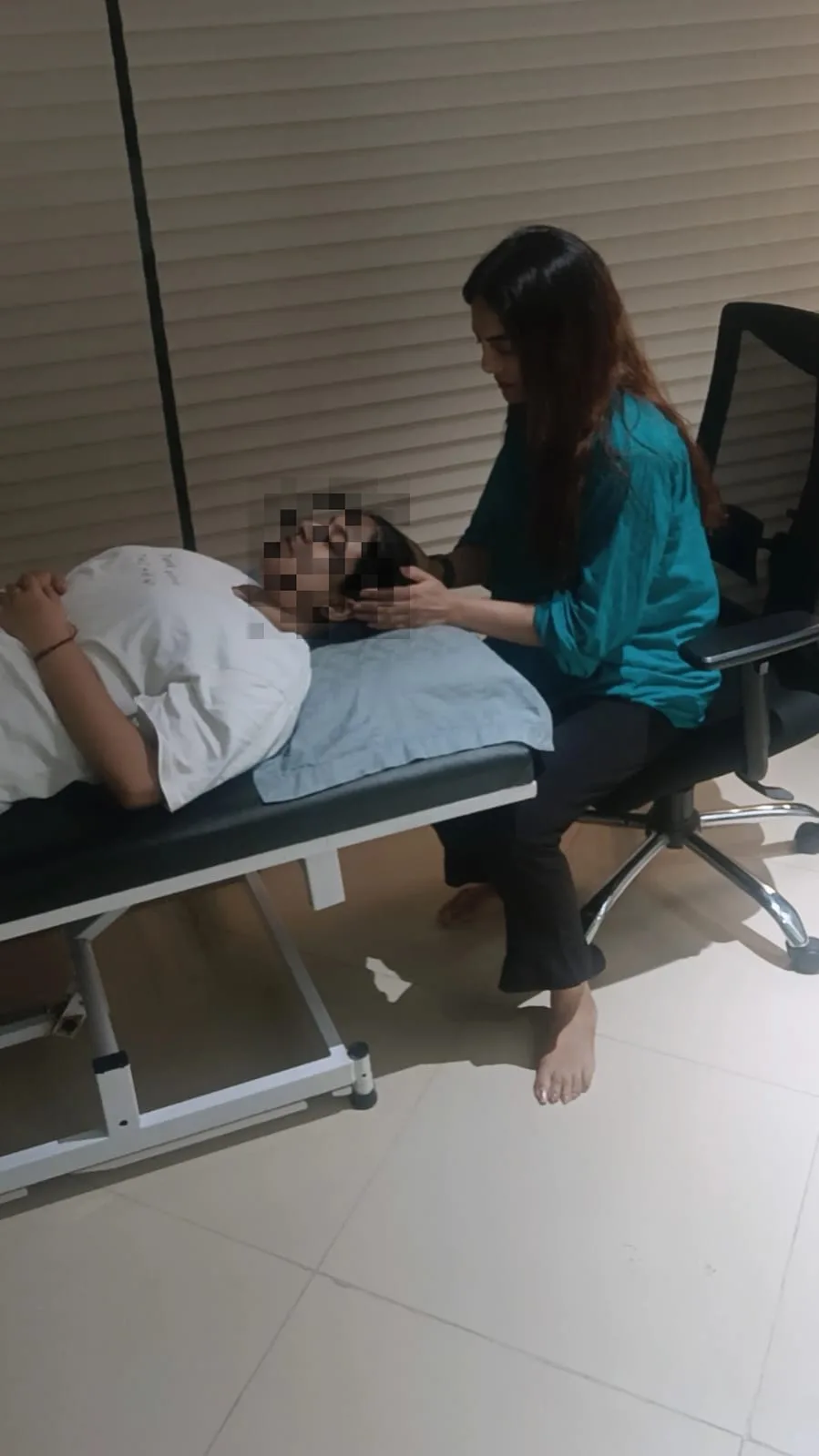
A hypnotherapy session in progress with a client resting comfortably and the therapist seated alongside. The client's identity has been obscured for privacy.

Practical questions

A Few Things People Usually Ask

Do I need to stop drinking caffeine before a session?

No. You are not asked to make abrupt changes in order to attend, and this practice does not encourage sudden alterations to regular intake.

Will I be asked to do something I am uncomfortable with?

No. Everything is discussed in advance, and you can decline or stop at any point without needing to justify it.

What if I have a health condition or take medication?

Please raise it at the initial conversation, and please also discuss it with an appropriately qualified healthcare professional. Hypnotherapy does not replace medical care, and it may not be appropriate for every person or every situation.

What if it does not work for me?

That happens, and it is worth saying so. Individual experiences vary, and an approach that suits one person may not suit another.

Please note

Making contact or sending an enquiry does not confirm an appointment. Hypnotherapy does not replace medical diagnosis, treatment or advice from an appropriately qualified healthcare professional, and it may not be suitable for everyone. Please read the safety, withdrawal and suitability information before proceeding.

Ready to have the first conversation?

Getting in touch is not a commitment to a session. It is a chance to ask questions and find out whether this is likely to be useful for you.